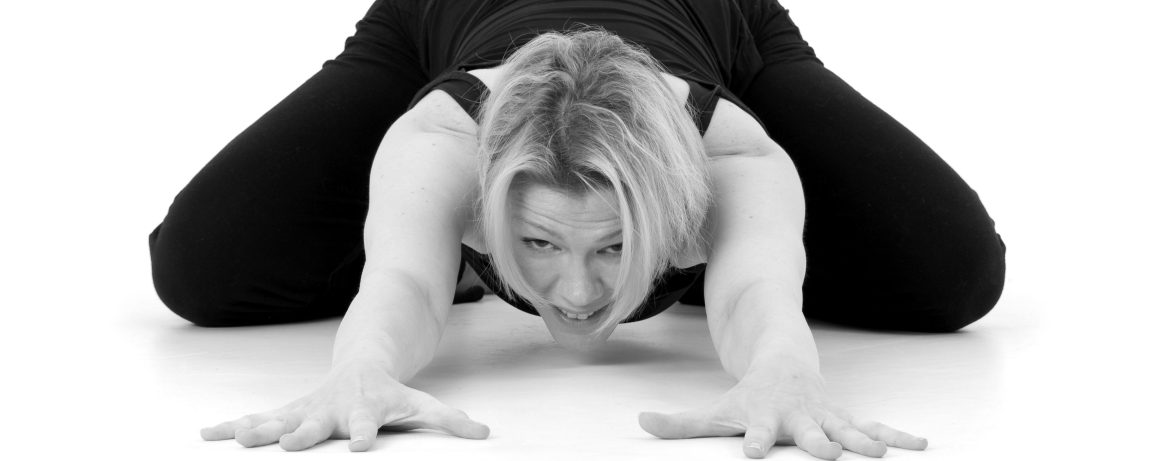


This website has been dedicated to developing Rock Star Yoga or Bon Jovi Yoga.
Yet the topic of yoga has been dormant for a while now.
I don’t know yet when Rock Star Yoga will return here, but I do know something else was needed first.
I wrote the larger part of this yoga guide in October 2023, yet did not finish it until summer 2024.
So even when I am on topic, and think I have dedicated myself to teaching yoga, in written form, it still takes longer than I expect.
The process of unlearning and undoing of what I thought was yoga, was far slower and way more extensive than I anticipated in October 2023.
But ultimately it has lead to the distilled principles you will find in this guide.
Which is what I would call “A Meta” on yoga.
The key elements that make yoga so different from other forms of physical movement.
And it had to be concise.
This guide is written from the understanding that it is not so much how you move, as in what postures you do, what exercises you do;
But yoga means you move according to certain principles.
You could even be making up your own exercises, and I encourage you to do so.
Yet, I would not go as far as to say that you can do any form of sports or even any form of gymnastic or physical exercise, in a yoga way.
Not without going through lengths first, weeding out the yoga-contradictive ideas behind them.
I have been tempted more than once, to start working in a more to the point fashion. To start isolating certain muscle groups that needed attention, tailoring my practice to problem areas, or even according to science-backed principles of what is good for you.
“You need weight training or else!!”
You know the type.
But although all of these things, other fitness types, schools of thought, all look good on paper, they all dissect and tear apart the whole.
As soon as you compartmentalize your body, your yoga, your time, you lose the whole and you create chaos and suffering.
These nine steps are therefor not nine pieces, to be pieced together into one yoga exercise;
They are nine principles.
They are the nine principles, of yoga.
.
Suzanne L. Beenackers
23 July 2024
I am a writer, a mentor
and I teach yoga at de Club in Nijmegen, the Netherlands.
For Teachers
.
It is my belief that the science of yoga belongs in India, and that it is there where it will be developed. Not here, in the west.
In the 20th century yoga practitioners from India spread it throughout the world, and it is now indeed practiced around the world.
Just like the gurus in India intended it to be.
But although we have the branches now growing over the continents, what has not spread are the roots from which it came.
We can adapt yoga, we can develop it, we can understand it, we can even learn Sanskrit and study the ancient texts.
Yet we will always miss the foundation, we don’t have access to source nor to the context.
Which is why I believe that ultimately yoga will be divided into lineages that grow from India, and new ones that are rooted in the west.
Yoga for the western world, has become its own thing.
And with the benefit of being able to travel light.
I hold the belief that every western teacher needs to start condensing yoga into simple rules their students of all levels will understand.
The single goal of these written teachings is to aid students and other readers, to start a self-practice of yoga without using digital tools, after understanding the principles.
Like side-wheels on a bike are only a nuisance once a child can ride, we as teachers too, should consider yoga videos and online courses little more than beginner tools.
But also make up our own mind about how much we want to invest in learning the ancient Indian way.
If the passing on or development of Indian yoga, is part of our personal purpose.
If it is, great.
If not, reassess how you can contribute in your own unique way.
Learning Indian yoga and philosophy can have tremendous value.
But it puts us teachers, at risk of missing our purpose. At risk of not being of optimal service to the people around us, and to the people who will come after us, after we are gone.
We should be focusing on the needs of our students here.
And we first and foremost need to be giving ourselves huge permission to do so, regardless of what lineages or philosophies we then decide to employ.
If your yoga style is in any way taught on the internet, then the most important work of teaching is to be a guide for students in their home practice.
We can do this by writing a blogpost, creating a free guide, making yoga workbooks or by copying our yoga schedules for students.
And we can then start teaching our classes and our yoga videos too, based on these principles or on the yoga exercises from your guide.
Keep it brief.
This promotes a feeling of agency to your student, and encourages the student to learn through practice.
To actually give someone their own practice;
That is the true gift of yoga.
The Yoga Schedules
.
Since I always almost exclusively use the yoga schedules, from my vast library of yoga books, and hardly bother to read the rest, the most important part of this book are the actual yoga schedules.
Not the theory behind yoga.
I am adding two schedules to this booklet.
This summer (2024) I will be making a printed book available of this guide, and then the schedules will be moved to the back of the book.
And under a neutral name, so Rock Star Yoga, not Bon Jovi yoga.
But for this blogpost, the first schedule I am sharing is the original.
The free download that has been available under the name
Bon Jovi Yoga Setlist 2.0
It gives you everything you need to create your own practice, and in the upcoming years it will be part of the yoga I share on YouTube.
But I have also dived into my archives and found a schedule that probably dates back to 2009, 2010, when I made an A4 flyer in Word, with photos from the Yoga Journal database.
For this guide I recreated it, drawing sticky-men schedules, including writing out instructions on how to do the poses.
print here:
The 9 Steps of Yoga – Yoga Miracles yoga schedule 4 page PDF
These exercises too will be included in my yoga videos for YouTube.
Beware that these are all still regular yoga exercises;
Requiring a dry surface to sit or lie down on, and a temperature where you can practice wearing comfortable clothing.
Both things which may not be available, if you’re backpacking through a post-apocalyptic world!
But if you have a roof over your head and a warm place to stay every night, these are excellent yoga exercises, that could and probably should, last you the rest of your life.
The 9 Steps of Yoga
start yoga even when you have nothing and are living from a backpack
in a post-apocalyptic world
 the origin of the 9 steps
Maslow’s pyramid of needs are, top to bottom:
5. self-actualization
4. esteem
3. love/belonging
2. safety
1. physiological needs
Yoga teachers, yoga classes, yoga businesses and yoga studios, all fall into the middle;
They are place of love, belonging, and connection.
We relate to each other if we take classes at the same studio, and the teacher has a leadership role within the community.
However, when yoga is practiced daily, it becomes a life skill, effective in challenging circumstances, and an instrument to reach the highest levels of self-actualization.
The current model of students taking classes and us teachers doing our work in groups, has left yoga as an acquired life skill, one very applicable in the lower levels of Maslow’s pyramid, underexposed.
And it is also failing in how to use yoga as a tool to the highest levels of self-actualization.
Yet this pyramid provides us with multiple opportunities, for both teachers and students.
I will write about this from the teacher’s perspective but the student can act on their own accord;
(level 3) They can start organizing their own groups and hire or ask, a befriended yoga teacher to teach them;
(level 1+2) Students can set out to develop their own practice at home;
(level 4+5) Or they can start integrating yoga for their life dreams and goals.
This paragraph will talk about yoga from the teacher’s perspective, but this also includes you, the practitioner, once you start feeling your time has come to share what you know.
Maslows pyramid tells us the three areas where yoga teachers can expand are:
1. To the bottom of the pyramid, by teaching yoga as a life skill, something to be practiced daily.
2. Staying in the middle- by doubling down on the community value of yoga.
3. To the top of the pyramid, by teaching yoga as esteem and self-actualization.
Compare it to religion;
Although community is a huge part of religion, its essence is conversion.
To be a member means to be initiated into the guiding principles of the religion.
Someone who is religious would be able to practice their religion, even if they stranded on a deserted island.
And if they beached on this island together with other survivors, they would be able to teach and help others with their religion, go first in prayer, offer rituals and habits, and provide meaning to their new life there.
In the same way yoga can be used if we are stranded on an island, and yoga is even better equipped because it doesn’t just provide mental stability but it also regulates our bodies, and increases our physical regenerative powers.
But it only works if students have learned these guiding principles. If they understand what it is they do in a yoga class and why they are doing it.
They need to be initiated into the guiding principles of yoga.
It is this level of understanding yoga, of turning students into informed practitioners, that I think all yoga teachers should and could, aspire to!
The idea that someone does not just do yoga with you;
They learn yoga, during their time with you.
To learn how yoga is practiced without the mid-level community present.
Teachers who want to start including this in their work should write their own yoga guide, or have a go-to book from someone else, that fulfills the same purpose of guiding the student.
Mid-level pyramid teachers, so that is all teachers who instruct group classes or teach private yoga, can consciously start creating the communities surrounding their classes, making this an even more satisfying social experience!
And then of course there are those yoga teachers who will feel very compelled to start teaching yoga as a form of self-actualization, the highest levels of Maslow’s pyramid.
They can start writing books, teaching courses or offer private yoga or group courses, focusing on that.
Maslow’s pyramid offers a vision of how to start doing yoga, teaching yoga and seeing yoga, in a broader light.
And to give it a new life.
One for the 21st century.
Step 0: Unplug, Yoga in an affluent world
.
Q: How can I focus more on what I am doing,
right at this moment?
.
This very first version of these 9 Steps, was written when the world was not post-apocalyptic and we were living out of our phone, instead of out of a backpack.
If you too, have ample access to digital devices when you read this, your yoga is very simple, but not easy:
Stop doing that.
Stop using your phone for entertainment, have dedicated hours online, separate between work and private use and so on.
In the 20th century, when yoga came to the west, the biggest problem was that our bodies were different to people in India.
This was largely caused by us sitting on chairs all day, instead of on the floor.
Our hips were tight, so yoga had to be adapted.
But in the tens and twenties of the 21st century, our minds are absolutely wrecked by technology.
I could even feel it in the 00’s when I started having access to internet at home, and no longer had to go to an internet cafe for this.
I started developing a compulsive relationship with my email, refreshing the browser all the time.
Around 2013 the algorithms changed. First Facebook, and after that every other site.
Since then our minds are effectively taken over, and learning to unplug yourself from that can have “Neo in The Matrix” like proportions.
And disconnecting completely is hardly possible, so you will need to learn how to moderate. How to use it professionally, or socially-but-intentionally.
Somehow you need to start learning how to boldly stand your ground and hold yourself, with this ever-changing, ever-advancing, digital world aggressively hunting for your interaction.
Your emotional responses are how it feeds itself.
Find your calm, your cool, and reclaim authority over your own mind.
For now, that is your yoga.
Step 1: Create a Sanctuary
.
Q: How can I dedicate a physical space to doing yoga?
.
In Indian texts, it is recommended you have a special room “under lock and key”, dedicated just to your yoga practice!
By all means, if you can?
Then do so!
Having an entire room just for yoga and /or meditation, is ideal.
But since even really diehard yoga practitioners typically “only” practice for 90 minutes, and few houses come with spare rooms;
I don’t think many people will be able to free up an entire room just for their yoga.
Which means we need to look out for a different spot.
Yoga is practiced on a yoga mat, or other mat, usually 60 cm to 180 cm in length. And it is practiced on socks or bare feet.
Pillows and meditation cushions can come in handy, but in particular a blanket for your long relaxation.
And rolling up the blanket then provides you a cushion to sit on, as well.
One of the most important criteria to choose a spot for you practice, is that it is always the same spot, but not at any cost of course.
Even if your backyard is always free to practice in, it is probably still preferable to choose the living room before anyone else is up, and to practice in the crampy place next to your bed, at the other times.
Keys to choose your location are;
– the same spot/ consistent availability
– privacy
– free from distractions and being undisturbed
– temperature, preferably somewhere between a luxurious 21 degrees Celsius and in summer not warmer than 27 degrees.
– free from draft
– spacious enough to lie down with your arms extended wide as well as to extend them up overhead.
-high enough to stand up straight extending your arms overhead
I have seen a YouTube video of a practitioner who had made her sanctuary in the laundry room, so definitely think creatively here!
But talking about a whole room to yourself, privacy and temperature regulation make all of the above the most luxurious options.
It is also a reminder to be grateful all those moments in your life when you can create one of these spaces dedicated to yoga.
When it is easy to create a yoga sanctuary.
And when that is not possible, it is up to you to decide if you are still up for it.
Maybe you can adapt it- for example only practicing the breathing and meditation exercises you can do seated in a chair + do standing yoga poses, can really help!
And with shoes and a coat, you can even take standing poses outside.
In other cases rolling your yoga mat will symbolize creating your sanctuary, but even this is not necessary.
Yoga practitioner Meghan Currie has videos on YouTube of her practicing on beaches and on airports, and she used to have a biography that said she practiced “on any surface”.
Her sanctuary, was that she brought herself.
So it depends on who you are, and on your practice, how essential having a physical sanctuary is, and how it will look.
Your yoga sanctuary is an outer representation, of an inner dedication. Of who you are as a yoga practitioner, and it is an affirmation that you ARE, a yoga practitioner.
For many of us, it holds meaning to have our own yoga mat, which we do not share with anyone else.
Modern yoga mats can be rolled up, and carried with us. Travel mats are even thinner and can be folded into your luggage.
The easiest way to create your yoga sanctuary, is by rolling out your mat.
Step 2: Create time
.
Q: What time or moment of the day, is the most consistently available to reserve for yoga?
This is a hard one, because for most of us it will fluctuate what the best time is.
The most consistent practice is therefor created either by:
-allowing the time you do yoga to fluctuate. So you set the time, but if needed, your yoga is only 1 minute.
Or
-regulating your life, planning and then sticking to what you planned
If every day looks exactly like you planned it, yoga too will be done at the exact moment you planned it.
If you or your life are planning-repellent AND you don’t like tiny sessions, you can be consistent by planning your yoga at a moment it is the least likely to be overruled by other activities.
This is the classic AM morning yoga practice.
The ultimate consistent yoga would be to plan for it in the morning, and actually do it.
Before breakfast even.
And if you have to get up really early, to make it really small, like 5 minutes or so.
Since the 9 Steps are basically 100% functional, non-creative, yoga that is designed to save your life, this could be good enough reasons for you to make it your AM priority!
That you don’t require more seduction, but are actually someone who can plan their AM routine to the minute.
Personally, the only time I have been consistent in having an AM yoga practice, before breakfast, was when my life was in absolute shambles and I didn’t know what to do with myself.
Dedicating the first hours of my day to my yoga, became a way to get a sense of control.
I often think back to that time, overly romanticizing it because I know that structure and planning are not things I want in my life.
And that it marked one of the darkest times of my life.
In my case, having an AM yoga practice was ultimately a sign of crisis, not of health.
Instead I learned to raise the bar, and I now want my yoga to feel so good, so much fun, and also so meaningful that I want to do it, and to find myself on my yoga mat, even when I did not plan for it!
Just like my writing;
I write more than anyone else I know, yet I never plan for it.
It just happens when my agenda or to-do list tells me I have a million other things to do.
That is my ambition for yoga.
I have to tinker and play with it, until I fall in love with it and I want to be with it more than anything else in the world.
In which case “create time” for yoga starts meaning something different, and you take the blocks, the chucks, the unexpected hours that it rips out of your day, as a given. And you plan the rest of your life around it.
Like a lover that suddenly takes up your whole weekend and pushes your friendships, work and relationships to the margins of your life;
That’s, how compelling I want my yoga to be.
So for the ones who desire to be there with me, walking the edge between what we will get away with, and what will cost us dearly, those liking the thrill of it all, creating time for yoga, becomes a different assignment;
To make yoga so compelling it creates its own time.
.
Step 3: Let the mind create a schedule
.
Q: What are my values and what are my long-term goals;
And how can today’s yoga contribute to that?
For yoga to be successful two parts of yourself need to be working in conjunction: the mind and the body.
The job of the mind, is to get the bigger picture. To hold a vision for your yoga and for what your endgame is.
The Why, of you doing yoga.
This then influences the How, you do yoga.
How much time you reserve for it, how often you do yoga, but also what type of yoga you will do. The schedules you will choose, or the yoga videos you choose. And how much priority you will give yoga.
But it is your mind, that does this.
Don’t feel into it, come at it from the powerful perspective of building something, creating something.
Take responsibility over your yoga.
In the previous paragraph I told how I want to fall in love with yoga.
My choice of schedule or yoga then becomes:
“How can I make this yoga session invigorating and exciting? What would be an absolute Hell yes for me?!”
Step 3, Let the mind create a schedule, is really about letting go of what you did in the past, and looking into the future of your physical health and other goals (like falling in love with yoga) you may have for your yoga.
And design or decide on the perfect practice in the light of where you want this thing to go.
It’s like the Cheshire cat told Alice:
“If you don’t know where you’re going, any road will get you there.”
Know where you’re going.
.
Step 4: Let the body interpret and lead
.
Q: What does my body want, and does that include the yoga I had intended?
So now we have the mind all fired up about what we want to do, but we still have to sell it to the body.
If the mind is the masculine, the body, like a woman, needs a little or a lot more, to warm up to the idea of doing this.
You can’t just go around pushing the ideas you have about your yoga onto your body, any more than you should be pushing yourself onto someone else.
This is a consent thing, from the Mind to the Body;
What does your body need?
Maybe it needs something entirely different, like sleep, or food. or a painkiller. Maybe the body needs to take a nap.
In particular if you’ve been running around all day, ignoring the body, there is a realistic chance the body has entirely different ideas about what is required, than plans you/ The Mind, had.
Roll with it.
Do what the body asks.
Your job is to show up for your body. To be in the space of being with your physical self, and if appropriate, you can suggest some yoga to “her” (the body) but you’re waiting for a Hell Yes.
And the body will not always be this unwilling participant;
There will be days when it is strong, vibrant, and up for a challenge.
Just learn to feel the difference, and act accordingly.
Step 5: When the mind and body are one, there is only now
.
Q: How can the mind and body be more in tune?
There is a reason why phone and internet use cause so much suffering;
The awareness is no longer in our body.
If your awareness is not IN the body, you suffer.
Madonna said of internet use, and judging from her appearance this must have been somewhere in the 2000’s so far ahead of her time, that the connection established through internet was a false one, because our consciousness had not grown.
Internet brought us a way to spread our consciousness over a gazillion different things.
But it has not improved the quality or the amount of our consciousness.
In fact after the 2013 acceleration of algorithms our consciousness has notably gotten less, than the “amount” of consciousness we had in the 20th century, so now we have less AND we spread ourselves thin!
Ideally:
We have vast “amounts” of high quality consciousness, and we dedicate it primarily to being in the moment.
In our bodies.
That, is peace.
It is also related to why I have found all those schedules aimed at fixing one physical problem or supporting one feature of your body (or any other area of your life!!) do not work;
The “cure” itself, the schedule or habit you’re committing to with the goal of working on an isolated part of your life or body, comes at the expense of your awareness of the whole.
Everything you ever “do” for a specific outcome creates, causes its equivalent in chaos and suffering.
The only way to work around it, is if before you begin, you forget that why, and bring your full attention into the now.
And treat whatever it is you are about to embark on, as an exercise in wholeness.
In bringing your full awareness, into it.
Your mind, your awareness, needs to be in your body to feel whole.
The practice of consciousness and body being one, is the only yoga you need.
And everything that is not that, is not yoga.
Step 6: Inhale, let the belly expand. Exhale, let the belly flatten.
.
Q: Can I observe the rise of the inhale, and the falling of the exhale?
Your upper body is divided into two parts, divided by the diaphragm.
Above it you have the lungs and the heart, and below it you have the other organs.
So a belly breath, meaning that the belly rises on your inhale, does not actually go to the belly, because the air stays above the diaphragm, in the lungs.
What happens instead is that the diaphragm, a dome shaped tendon plate, is pushed down by a full breath, expanding into the organs below.
Then it snaps back into its original shape with the exhale.
The diaphragm is called the second heart;
A belly breath, with the diaphragm snapping back into shape, helps the heart to pump.
Belly breathing is the number one thing you can do to alleviate stress and calm your body and heart.
It is a single stand-alone exercise, and yoga could be as simple as just breathing to the belly.
In 99% of the cases, just like the awareness in the body from the previous step;
If you are breathing to the belly you are doing yoga.
It is really all you need.
And if you are not breathing to the belly, you are not doing yoga, and I don’t care how beneficial anyone says it is whatever you’re doing, I say;
Stop.
Sit down.
And breathe to your belly.
.
Step 7: Inhale: Reach, lengthen, extend, backbend, arch, open.
.
Q: On this inhale, where can I expand more?
If you remember the previous step:
The inhale expands the lungs, pushing the diaphragm down.
It is an expansive proces, that takes up space in the body. The body gets bigger, from the inhale.
So of course it then makes sense to choose to do the expanding movements on this inhale.
To stretch, to reach, to lengthen.
To open, to arch, to bend backwards;
Do them with your inhale.
Step 8: Exhale: Relax, pull in, twist,
bend sideways, fold forward, close.
.
Q: On this exhale, how can I let go more?
On the exhalation the lungs empty out, the diaphragm moves back into its original position and the organs of the belly move back into their resting position.
It is a process where the body becomes smaller, and more compact.
It is also a process of contraction, in particular for the pelvic floor.
The pelvic floor is a tendon plate, much like the diaphragm. But it operates through the muscles “down there” and doesn’t have that dome-snapping feature like the diaphragm in the middle of our bodies does.
This is why learning to understand the pelvic floor takes more time, than learning what a belly breath is.
The easiest way to get the feel of working with the pelvic floor is to realize it is directly mirrored in the tendon plate of the mouth;
If you make a sucking motion with your mouth, you can immediately feel the pelvic floor.
In fact I believe that sucking your thumb would be very beneficial for adults, dental issues aside. Although they could be worth the hassle of getting braces really!
I still suck my thumb, and credit it for my health and for my youth.
You could also buy a pacifier, to train your pelvic floor simply by sucking something in your mouth.
In its most active, you could say “most optimal” form, yogic breathing means that at the end of the exhale, you lift the pelvic floor up from the inside.
The move you feel if you suck your mouth.
This is like giving your exhale a little oomph.
So then the motion becomes:
Inhale:
lungs full
diaphragm pushes down
belly gets bigger
pelvic floor expands
Yoga for inhales:
Expanding movements, stretch, reach, lengthen, open, arch, bend backwards.
Exhale:
lungs empty
diaphragm moves back to dome shape
belly gets smaller, relaxes
pelvic floor moves up, oomph optional
Yoga for exhales:
Inward movements, Relax, pull in, twist, bend sideways, fold forward, close.
.
Step 9: Finish with a long relaxation
.
Q: How can I comfortably lie down, 5-20 minutes?.
Another very important difference between yoga and no that’s not-yoga. The long relaxation.
Lie down on your back with your hands next to you, palms facing up or resting on the pinky side of the hand.
Feet are relaxed at hip width, feet dropping open, with the toes pointing out to the sides.
Roll your shoulder blades closer together, lower into the back, so that you can feel your chest opening more.
Elongate your neck and tilt your chin in slightly, towards the chest.
You can also let your head rest onto a pillow, but keep the forward tilting of the chin to your chest.
You do not want to have your chin pointing up, since this causes the mind to drift away.
Close your eyes.
You need your eyes resting inward and down, and your chin pointing in towards you.
Inhale – feel your belly and body expand
Exhale – feel your belly and body relax
Inhale – feel your body expand
Exhale – feel your body relax
Inhale – expand
Exhale – relax
Relax, for as long as you like, in your own yoga sanctuary.
Namaste.
Final words for this post
Thank you for reading or browsing through this post.
It will be refined and created into a printed version, in a few weeks (summer 2024).
This spot, of its final pages, will then be reserved for the practicing schedules, so maybe you too, like to have an extra link to them.
It gives you everything you need to create your own practice.
And in the upcoming years it will be part of the yoga I share on YouTube.
And here was the schedule from the archives from 2009, 2010, which I recreated:
The 9 Steps of Yoga – Yoga Miracles yoga schedule 4 page PDF
These exercises too will be included in my yoga videos for YouTube.
Thanks again for reading, and I hope The 9 Steps of Yoga will inspire you to create your own practice.
And that the post-apocalyptic part will not be necessary 😉
~Suzanne
NEW founded in MAY 2024: SUBSTACK
free memberships provided
other socials:
Instagram – Twitter – Rock Star Writer Facebook – Facebook Suzanne Beenackers Schrijver – LinkedIn


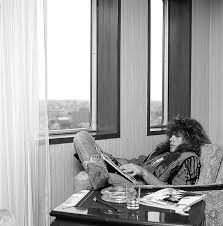

 This was when, after all the photo sessions that had taken place when the album would still have a cowboy theme (and be called Wanted Dead or Alive);




 Welcome to this renewed and rebooted d
 Welcome to this renewed and rebooted d



 There is an amazing 1993 recording for this day!
 One of the reasons it took me until the longest of times to recraft my second career in yoga, and to also find a way to get back to the mat and enjoy my own practice, is because back in the late 90s, I had failed to see WHY I had felt attracted to doing yoga, and to teaching yoga.
 Daily Bon Jovi Yoga